
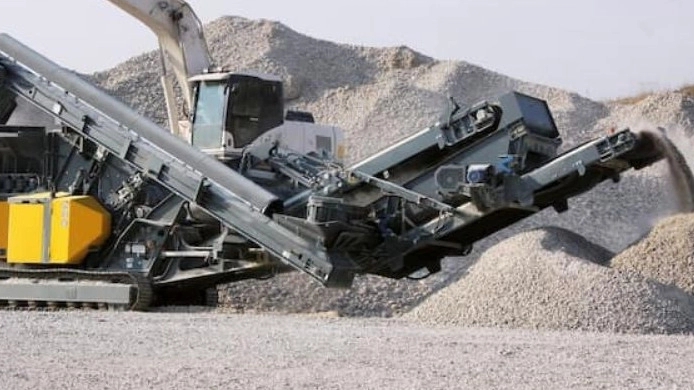
Crushes are one of the most important and critical equipment in the material processing chain in the mineral, construction, recycling and agricultural industries. The main task of these machines is to reduce the size (crushing) of rocks, minerals, concrete, asphalt and other hard materials to smaller and usable dimensions in later processing stages (such as grinding, running or direct use in concrete and road construction).
The effective performance of a crusher not only affects the quality of the finished product, but also directly determines the operating costs (such as energy consumption and spare parts abrasion) and project implementation time.
The general principles of crushing performance
Materials are generally based on three main mechanisms:
Crusher Types: Category by Crushing Stage and Performance Mechanism
Crusher is traditionally divided into three main categories based on the initial size of the input material and the purpose they have in the process: primary, secondary, and third party.
1. Early crusher (Primary Crushes)
This category is used to crush very large stones (often with a nutritional dimensions of more than 2 mm or even 2 m) that are extracted directly from the mine to medium dimensions (usually less than 2 mm).
A) jaw crusher (jaw crusher)
This type is the most classic and most used initial crusher.
- Mechanism: Crusher is mainly done by applying the force Pressure between two pages called "fixed jaw" and "removable jaw". With a reciprocal movement, the jaw compresses the material downward and in a thinner gap to break down.
- Benefits: The ability to accept very large materials, high power in initial crushing, strong structure and resistance to heavy loads.
B) large roller crusher (Primary Gyratory Crusher)
operates similar to jaw, but its internal structure is different and has a large central cone that moves downwards.
- Benefits: much higher capacity than in the same jaws, suitable for crushing materials on very large scales (superb projects).
2. Secondary Crusher (Secondary Crushes)
These crushering the crushed material from the first stage (usually below 2 mm) to smaller dimensions (below 1 mm).
A) conical crusher (COD CRUSHER)
These devices are the best option for secondary and third -party crushing and are designed for semiconductor to hard.
- Mechanism: Crusher is caused by pressure and abrasion between a jacket (inner moving piece) and a conqueror (external constant body). Magel's hyperbolic motion causes continuous crushing.
- Types: cones are divided into standard types, Short Head and Super Side by size and level of contact. Above.
B) Impact crusher)
These devices crush the material using impact force.
- Mechanism: Materials by high -speed rotor that have hammers (Hammers) are thrown into the Aprons and broken by collision as well as abrasion between the hammers.
- Benefits: Production of a better geometrical product ( (In the absence of very hard materials).
- Application: Moderate hardness, concrete and asphalt recycling, river material production.
1. Third Crusher and Sand Makers
This step is dedicated to producing the final product with precise granulation (such as natural or artificial sand).
Vertical Crusher (Vertical Shaft Impactor - VSI)
These devices are known as the main sand instruments.
- Mechanism: materials are imported from the center and are thrown into the stone walls (stone on stone) or metal plates by a high -speed rotor. In this case, the crushing is often done through the phenomenon of "rock on rock", which results in excellent (cubic) sand production.
- Application: washed sand production, correction of particulate geometry in specific concrete production.
Application of crusher in various industries
The scope of the use of crushers is very wide and almost any industry that deals with stone materials requires them:
- Mineral Extraction from Mining: Crusades of precious stones (gold, copper, iron), lime, dolomite and phosphate stone for preparation for laching or grinding operations.
- Sand production for construction: National).
- Cement Industry: initial crushing of limestone and clay as furnace raw materials.
- Recycling Materials: Crushing destructive concrete, asphalt and glass for reuse in construction projects (reducing environmental costs). Ceramic: Caulin and other minerals needed.
The Importance of Choosing the Suitable Crusher: Economic and Technical Analysis
Decisions on buying a crushing system is one of the most important equipment investment. Incorrect selection can lead to a stopping of production line, a sharp increase in maintenance costs and producing an out -of -standard product.
Key Factors in Selection:
Crusher Day Price: Market fluctuations and effective factors
Determination of Crusher Day Price varies due to its strong dependence on world raw materials (alloy steel, manganese) and exchange rates.
The main factors that determine the price:
Recommendation: Due to the constant changes, for the day price accurately, direct inquiry from valid suppliers and pre -invoice is essential.
Crushing Guide: Quality and Support
Buying a long -term investment crusher and should not be done only at the lowest price.
Sell Crusher: Market Options and Terms of Trading
Crusher sales market in Iran is very dynamic and includes new equipment vendors, second -hand and ureal service providers.
- Cash & Installment Sales: Many domestic manufacturers and importers offer long -term installment sales facilities (credit and prepaid) to facilitate the purchase of large projects.
- Second -hand equipment: Original) with a new price deficit, they can work close to the zero device.
- Supplying specialized parts: Successful sellers, in addition to selling complete device, focus on supplying specialized consumables (such as hammer hammers, jaws and conical elements).
Specialized advice in the selection of crusher: process engineering
Correct counseling is the starting point of any successful crushing project. This consultation goes beyond the just selection of a device and includes the design of an optimized crushing circuit.
Specialized Advice Steps:
Why do we pick up? Focusing value added
We provide a complete collection of services and products:
- High Diversity in Models and Brands: Presentation of standard quality domestic builders as well as representation or supply of high -end imported models, suitable for any budget.
- Competitive and Transparent Price: Removal of unnecessary intermediaries to provide the best prices for original equipment and supplies Supply of warehouses from high -profile parts as well as rapid coordination for custom -made devices.
- Extensive after -sales service: Technical team for installation, launch and training personnel for optimization and preventive maintenance. Give.
How to Contact: Your Bridge Successfully In Crusher
To get Daily Price Different models of jaw, cone, VSI as well as specialized advice on optimizing the current product line or ordering new equipment.
Phone: 09122132102 (Sales and Technical Expert)
Summary: Intelligent Infrastructure Infrastructure
Crushers are the spine of building materials and mineral processing. The reliable and efficient performance of these machines directly affects the profitability and sustainability of your construction projects. The clever selection of the device, based on a proper understanding of the capacity, the hardness of materials and the supply of spare parts from reputable suppliers, is the key to success and dramatically reducing operating costs in the long run. We are ready to provide full advice and support along the way.